Microfluidic Chips and Flow Cells - Translume
Off-the-shelf Microfluidic Devices
Translume fabricates a wide array of standard microfluidic chips and standard flow cells, all of which are made from fused silica glass.
The Sustainable Lab: Why Glass is the Right Choice
Transitioning from plastic to glass microfluidic chips is more than a technical upgrade—it is a vital step in your journey to eliminate laboratory plastic waste.
- Eco-Friendly Origins: Fused Silica Glass is crafted from natural, abundant sand, whereas most plastic chips rely on petroleum-based polymers.
- True Multi-Use Durability: Unlike plastic chips that degrade or absorb molecules over time, glass is chemically inert and mechanically robust, allowing for endless reuse without loss of precision.
- Stop the "Throw-Away" Cycle: Most plastic microfluidics are designed for single-use disposal. Glass chips are an investment in a circular lab economy—they are built to be cleaned, sterilized, and put back to work, not thrown into a landfill.
- Zero Microplastics: By choosing glass, you eliminate the risk of microplastic shedding into your samples or the environment, ensuring both data purity and ecological safety.
-
Superior Performance: Fused Silica Glass withstands high temperatures and harsh solvents that would melt or warp plastic, making it the responsible choice for complex, long-term research.
Every glass chip you integrate into your workflow is one less piece of plastic entering our ecosystem.
Using the links below, select the fused silica glass microfluidic chips or flow cells that best match your needs.
To place your order, you may either contact us by email or call our Sales office directly at (734) 528 6371.
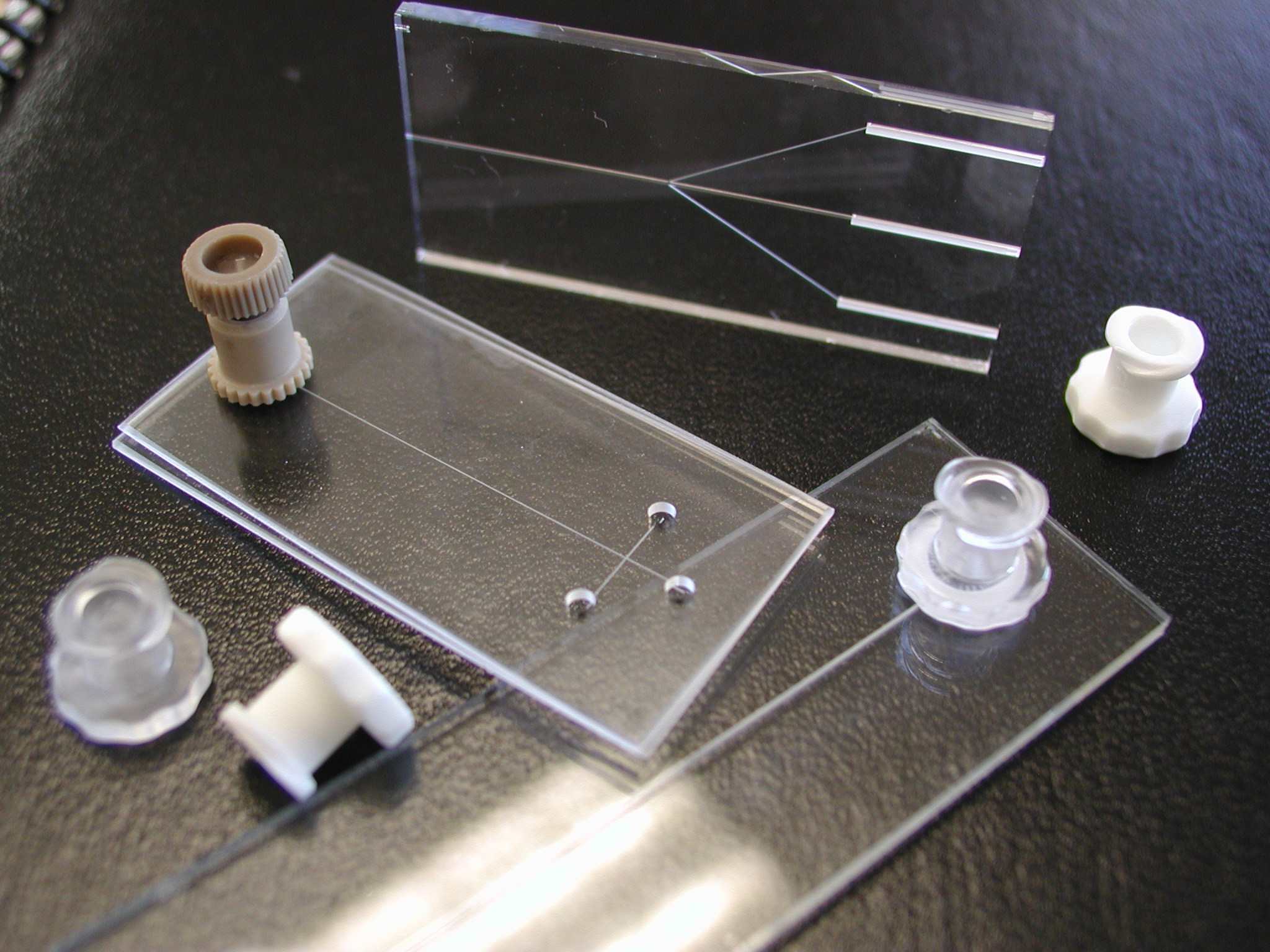
Microfluidic Chips
All of the common standard designs - Straight, Cross, etc., plus advanced micro-flow mixer design
Many available immediately from stock
Microfluidic Chips? Flow Cells? What is the difference?
You may be wondering Microfluidic Chips? Flow Cells? What is the difference?
Microfluidic Chips and Flow Cells are designed to control the flow of a small amount of liquid. They share many properties, but they have different optical characteristics, which may affect their suitability to your specific application.
Microfluidic Chips have microfluidic channels that are optically clear on either the top or the bottom. The opposite side is translucent, and so are the channel sidewalls. In contrast, Flow Cells have channels that are optically clear on both the top and the bottom (the sidewalls are translucent).